Introduction
If you are a parent and see that your child isn’t talking as much as other kids, you are not alone. Wondering whether it’s a speech delay or something more, like autism, is an experience many families face. Sorting out these differences can feel confusing or even overwhelming. The good news is that asking these questions is one of the most loving steps you can take for your child’s development.
Delays in talking or unusual ways of interacting with others are common in early childhood. Sometimes it’s a simple “late bloomer” situation; other times, it signals a need for early support or intervention.
This article offers clear, compassionate information whether you’re just beginning to notice some differences or seeking deeper understanding. We will explain how speech delay is different from autism spectrum disorder (ASD).
We will also show you how to recognize key signs and what help is available. Most importantly, you will find comfort in knowing that asking for help is always okay. Every step you take helps your child grow and be happy.
What Is Autism Spectrum Disorder?
Autism spectrum disorder (ASD) is a developmental condition that begins in early childhood, characterized by differences in social communication and behavior patterns. Children with autism may have difficulty using words, gestures, or tone of voice to connect with others. They might also show repetitive movements, a strong need for routines, or intense interests in specific topics.
According to the Centres for Disease Control and Prevention (CDC), autism affects how a child communicates, learns, and interacts with their environment. Some children with autism face challenges learning to talk and may use fewer words or repeat phrases (echolalia). However, speech differences are just one part of the picture.
Autism impacts how a child shares interests. It also affects how they play with others. Additionally, it influences their responses to eye contact, facial expressions, and social gestures.
Children with autism often have both language differences and unique social behaviours. This is different from children with just speech delay.
For example, a child with autism may not respond when their name is called. They might avoid eye contact and prefer to play alone, even when parents try to join in. They may enjoy lining up toys, repeat the same actions, or react strongly to certain sounds or textures.
As one paediatrician explained: “Speech delay can be a single challenge, but autism typically comes with a pattern of differences in the way children connect, play, and communicate not just in how much they talk, but in how they share the world with others.”
Clinicians use established guidelines, such as those in the Diagnostic and Statistical Manual of Mental Disorders, Fifth Edition (DSM-5), to accurately identify autism and provide appropriate support. Understanding these distinctions helps families and professionals collaborate to tailor care and nurture every child’s potential.
What Is Speech Delay?
Speech delay means a young child starts talking and using language later than usual for their age. This happens without other problems in social skills or play. The Centres for Disease Control and Prevention (CDC) and the American Academy of Paediatrics (AAP) define speech delay as a lag in using words, sounds, or sentences compared to typical developmental timelines.
Children develop at different rates, and some are “late talkers.” These children may use fewer words than peers at age two but show good understanding, use gestures, and enjoy interacting.
The main difference is that children with speech delay often respond to their name. They share smiles and make eye contact. They also enjoy playful back-and-forth communication.
Common Causes of Speech Delay
Hearing loss: Even mild hearing issues from frequent ear infections can affect sound learning and production.
Family history: A pattern of late talking in parents or siblings may be present.
Speech sound disorders: Difficulty coordinating lips, tongue, and jaw can impact clarity.
Developmental differences: Some children progress at their own pace, especially if motor or social skills are strong.
Most children with isolated speech delay remain interested in play and social interaction.
For example, a two-year-old might point to objects, laugh during games, or bring toys but only say a few clear words like “mama,” “car,” or “ball.” They may use gestures or vocal sounds to communicate and try to engage socially.
Speech delay is different from a broader language delay. A language delay includes trouble understanding or using words. Also, it differs from autism.
In autism, challenges go beyond speech. They include social engagement and flexible play. Many children with speech delay catch up with extra modelling at home and brief support from a speech-language pathologist (Johnson et al., 2019).
If you’re concerned about your child’s speech, asking questions early leads to reassurance and, if needed, helpful guidance for next steps.
Key Differences and Overlap Between Autism and Speech Delay
Parents often notice late talking and wonder if it’s a speech delay or autism. While these can look similar initially, important distinctions exist, supported by the American Academy of Paediatrics (AAP), and recent studies.
Where Speech Delay and Autism Overlap
Late Talking: Both groups may say few or no words by 18–24 months.
Expressive Language Gaps: Difficulty forming words, unclear speech, or limited vocabulary can occur in both.
Frustration: Children unable to communicate easily may show upset or tantrums regardless of cause.
Key Differences to Watch For
Social Connection: Children with speech delay usually show strong interest in people making eye contact, smiling, and wanting to play while children with autism often have reduced or unusual social engagement (DSM-5).
Nonverbal Communication: Gestures like pointing and waving come naturally to children with speech delay but may be limited or absent in autism (AAP, 2020).
Imaginative Play: Pretend play is common in speech delay but often reduced or repetitive in autism (Landa, 2018, systematic review).
Repetitive Behaviours and Interests: Hand flapping, lining up toys, and insistence on routines are typical in autism but not in speech delay (DSM-5).
Responses to Name and Social Smiles: Regular response to name and social smiling usually indicate speech delay; lack thereof suggests autism (CDC milestones).
Two Real-Life Scenarios for Parents
Scenario 1: Typical Speech Delay
Sophia is 2 years old. She uses only a few words but brings you her favorite book, makes eye contact when you smile, and claps along with songs. She points to trucks outside and imitates your actions during play. Her main challenge is pronouncing words clearly.
This pattern engaged, socially connected, playful, but late with speech often indicates speech delay rather than autism.
Scenario 2: Signs Suggesting Autism
Liam, also 2, doesn’t say clear words. He rarely looks at faces, doesn’t respond when called, and prefers arranging cars in a row instead of joining pretend play. Changes in routine upset him greatly. He doesn’t point or wave goodbye and sometimes seems unaware of others in the room.
This combination lack of social responses, repetitive behaviours, and absent gestures aligns with common signs of autism (AAP).
A detailed evaluation can give a diagnosis. However, knowing these differences helps you talk with your child’s doctor.
Signs to Watch For By Age
Monitoring your child’s development over time helps identify patterns suggesting speech delay or autism. The CDC’s milestone checklists and the American Academy of Paediatrics offer age-based markers and red flags.
Key Milestones and Red Flags
By 12 months: Typical children respond to their name, babble, and use gestures like waving or pointing. Red flags include no babbling, no gestures, or no response to name.
By 18 months: Most toddlers say several single words and follow simple directions. Red flags include fewer than six words, no pointing to show interest, or no imitation of actions.
By 24 months: Children usually combine two words (“more juice”) and engage in simple pretend play. Red flags include no two-word phrases, loss of language skills, or lack of social play.
By 36 months (3 years): Kids form short sentences, play with others, and use eye contact. Red flags include no three-word sentences, no pretend play, or avoidance of eye contact.
Additional signs leaning toward autism include repetitive movements (hand flapping, rocking), strong reactions to sensory input, and difficulty adapting to changes in routine. Children with isolated speech delay typically show interest in social games and respond to social cues, even if speech is limited.
When to Seek Evaluation and What to Expect
Spotting the Signals: When Should Parents Take the Next Step?
It is normal to wonder if a child’s speech or behaviour is just part of their unique rhythm. However, certain signs should prompt earlier professional evaluation:
- No babbling, pointing, or waving by 12 months
- No single words by 16 months
- No two-word combinations (e.g., “more juice”) by 24 months
- Loss of speech, babbling, or social skills at any age
- Limited eye contact or social interest such as not smiling back, rarely responding to name, or seeming unaware of others
- Repeating actions or intense attachment to routines
- No interest in pretend play, lack of gestures, or not following a parent’s gaze or pointing
Trust your instincts: if you notice any combination of these signs or feel concerned, reach out for evaluation.
Who Should You Contact?
Your Paediatrician: They will discuss concerns, perform quick screenings, and guide next steps.
Early Intervention Programs: For children under 3, every state offers free or low-cost evaluations through early intervention services without needing a doctor’s referral.
Speech-Language Pathologist (SLP): If speech or language is the main concern, an SLP can provide detailed assessment. Paediatricians or EI programs often make referrals.
What Happens During an Evaluation?
Evaluations are child-friendly and play-based. Professionals will:
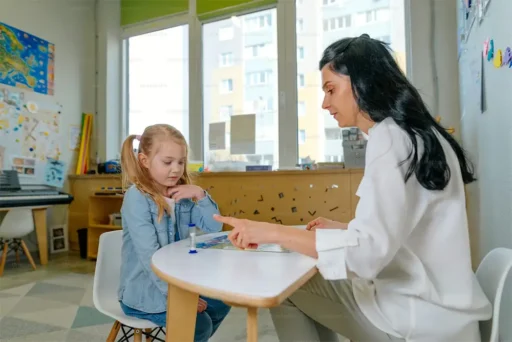
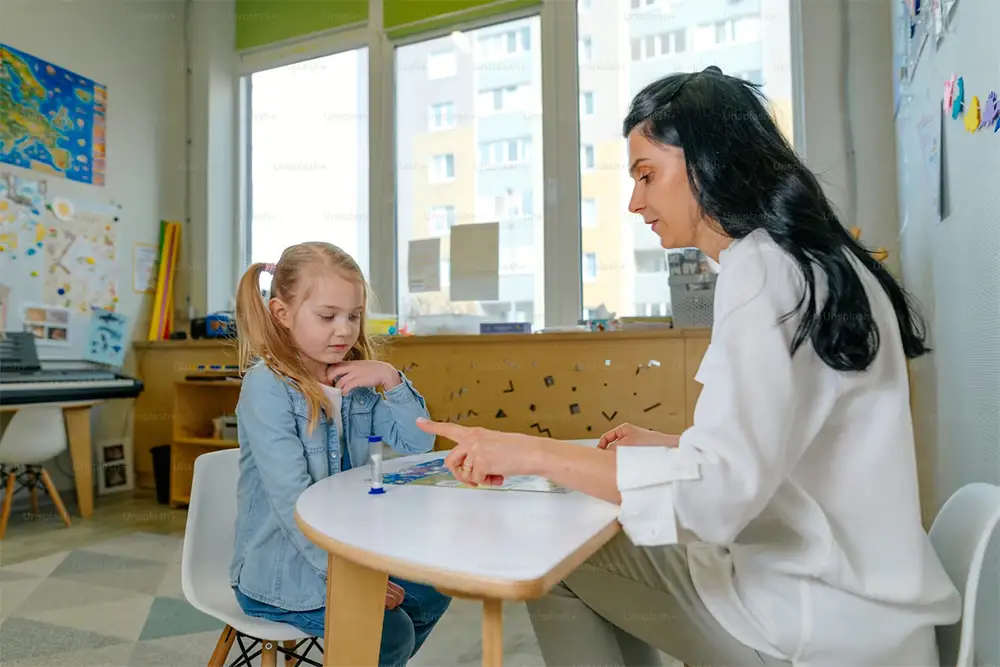
Observe your child’s interaction, play, and communication using toys, books, and everyday objects
Ask about your child’s milestones, behaviours, and family history
Use structured checklists like the CDC Milestones to guide observations
Assess responses to language, gestures, and social cues in real time
Afterward, you’ll receive a summary highlighting strengths, areas needing support, and a plan for next steps. This may include advice, therapy referrals, or follow-up appointments, providing clarity and direction.
Interventions, Home Strategies, and Resources for Parents
Evidence Based Interventions: What Helps Most?
Research supports three main approaches to help children with speech delay or autism spectrum disorder (ASD): speech therapy, parent-mediated programs, and early intervention services.
- Speech Therapy (Speech-Language Pathology)
Speech-language pathologists (SLPs) tailor therapy to each child’s needs, focusing on specific words, sounds, or social use of language. Systematic reviews, including Cochrane reviews, confirm that speech therapy improves both understanding and expression in children with delays and ASD. - Parent-Mediated Programs
Programs teaching parents specialized play and communication techniques, such as Hanen ‘It Takes Two to Talk’ and the Early Start Denver Model, have demonstrated effectiveness in randomized clinical trials. Parents can enhance their child’s communication and social skills at home. - Early Intervention Services
For children under three, early intervention programs provide team-based support at no or low cost through state and local agencies. An AAP-endorsed systematic review shows that early intervention improves language, social development, and independence.
5 Practical Home Strategies Parents Can Use Now
Follow your child’s lead: Join their play and label objects, actions, and feelings as they show interest. This shared focus naturally supports language development (McDuffie et al., 2011).
Use gestures and routine actions: Pair simple signs or gestures with words (e.g., “wave bye-bye!”) and repeat consistently. Visual cues help young children learn (ASHA guidance).
Offer choices: Present two items and name them (“Do you want an apple or a banana?”). Even if your child points, this reinforces word meaning and encourages attempts to speak (Roberts & Kaiser, 2011).
Model simple language: Use short phrases at your child’s level, repeat key words, and exaggerate sounds to help new words stick.
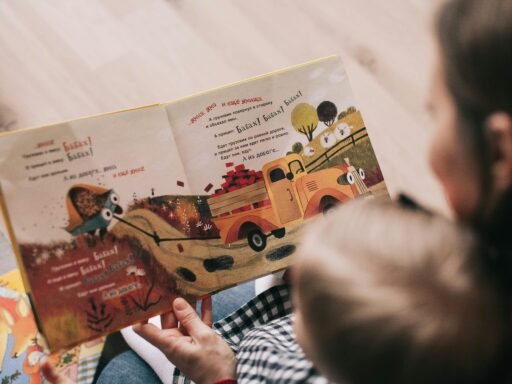
Read together daily: Choose picture books with clear images and simple stories. Describe pictures, let your child turn pages, and encourage any communication attempts. Storybook reading boosts vocabulary and comprehension (Mol et al., 2008).
Trusted Resources and Where to Find Help
American Speech-Language-Hearing Association (ASHA): Milestones & guidance
CDC “Learn the Signs. Act Early.” resources
Autism Speaks Family Services Tool Kits
Local early intervention programs (search “[Your state] Early Intervention”)
If you have questions or need support, reach out to your paediatrician or a certified speech-language pathologist. Early action helps children reach their best potential, and every caring step you take matters.