
Speech Delay in Children
When your child seems slower to talk than their peers, the worry can feel overwhelming. You might find yourself comparing your toddler to every other child at the playground, wondering if you should be concerned or if you’re being anxious for nothing. The truth is that speech development follows a remarkably wide range of what’s considered normal, yet sometimes delays signal something that deserves attention and support.
Let me walk you through what speech delay actually means, how to recognize when concern is warranted, and most importantly, what you can do to help your child thrive.
What Speech Delay Really Means
Speech delay refers to when a child’s speech development lags behind what we typically expect for their age. But here’s what makes this tricky: children develop at vastly different rates, especially when it comes to language. Some children speak in clear sentences before their second birthday, while others are still working on single words well past that point, and both can be completely normal.
Think of speech development like physical growth. Just as children hit growth spurts at different times, language emerges on its own timeline for each child. The key question isn’t whether your child matches some arbitrary milestone chart perfectly, but whether they’re making steady progress and showing signs of understanding and attempting to communicate.
Speech delay becomes meaningful when:
- A child falls significantly behind expected patterns for their age group
- Progress seems to have stalled altogether
- The gap between their abilities and their peers continues to widen
For example, a child who isn’t babbling by twelve months, who has fewer than ten words by eighteen months, or who isn’t combining words by age two and a half might benefit from evaluation. These aren’t hard rules that determine anything definitive, but they’re helpful guideposts that suggest it’s worth taking a closer look.
The Difference Between Speech and Language
Before we go further, let me clarify an important distinction that often confuses parents: speech and language aren’t the same thing, though we often use these words interchangeably in everyday conversation.
Speech refers to the actual sounds your child makes, the physical act of forming words with their mouth, tongue, and vocal cords. When a child has difficulty pronouncing sounds correctly or speaks in a way that’s hard to understand, that’s a speech issue.
For example: Three-year-old Maya can tell you all about her day at preschool, but she says “wabbit” instead of “rabbit” and “thun” instead of “sun.” She has lots to say, but the sounds aren’t quite right yet. This is primarily a speech challenge.
Language, on the other hand, involves understanding and using words to communicate meaning. A child with language delay might have trouble understanding what others say to them (called receptive language) or difficulty expressing their own thoughts and needs (called expressive language). Some children struggle with both.
For example: Three-year-old Liam can pronounce words clearly, but when you ask him “Can you get your shoes from the bedroom?” he looks confused and doesn’t respond. He can say “shoe” perfectly, but he’s not connecting the words to meaning or following through with understanding. This is primarily a language challenge.
Why does this matter? Because the approach to helping a child differs depending on whether the challenge is primarily with speech sounds, with understanding language, with expressing themselves, or some combination. A child who understands everything but struggles to form clear words needs different support than a child who can pronounce sounds well but doesn’t grasp what words mean or how to use them.
Recognizing the Signs at Different Ages
Let me paint a clearer picture of what to look for as your child grows, keeping in mind that these are general patterns rather than rigid requirements.
First Year (Birth to 12 Months)
In the first year, babies typically progress from crying and cooing to babbling that includes different sounds, which is a key language milestone. By around nine to twelve months, most babies are experimenting with sound combinations like “ba-ba” or “da-da,” and they’re starting to understand simple words and respond to their name.
Watch for these patterns:
- Around 6 months: Making different vowel sounds like “ah,” “eh,” “oh”
- Around 9 months: Babbling with consonants like “ba-ba-ba” or “ma-ma-ma”
- Around 12 months: Responding to their name and simple words like “no”
Consider evaluation if: Your baby isn’t making varied sounds by their first birthday, or if they seem unresponsive to sounds and voices around them.
Toddler Years (12 to 24 Months)
Between twelve and eighteen months, you’ll usually see a child’s first real words emerge. They might only have a handful of words, but they’re using them purposefully. They understand simple instructions like “come here” or “give me the ball,” and they’re pointing at things they want while making sounds or attempting words.
Example of typical development: Fifteen-month-old Jordan says “dada,” “ball,” “more,” and “uh-oh.” When you say “Where’s your nose?” he points to his nose. When he wants his sippy cup, he points and says “da” (his version of “that”). He’s communicating, even though his vocabulary is small.
By age two, most toddlers can string two words together to form simple phrases like “more juice” or “daddy go.” They can follow two-step directions, and strangers can understand at least half of what they say. Their vocabulary typically includes at least fifty words, though some children have many more.
Consider evaluation if:
- Fewer than six words by 18 months
- Not combining two words by 24 months
- Doesn’t understand simple instructions like “give me the toy”
Preschool Years (3 to 5 Years)
At three years old, children generally speak in sentences of three to four words, tell simple stories, and can be understood by unfamiliar adults most of the time. They’re asking questions constantly and using language to express a wide range of wants, needs, and observations.
Example of typical development: Three-year-old Sophia tells you “I want the blue cup” and asks “Where daddy go?” She can tell you she’s hungry, cold, or wants to play outside. When her grandmother visits, grandma understands most of what Sophia says, even if some sounds aren’t perfect.
Consider evaluation if:
- Still mostly unintelligible to unfamiliar adults by age 3
- Not speaking in sentences by age 3
- Not asking questions or telling simple stories by age 4
If your child seems significantly behind these patterns, or if you notice they’ve stopped making progress or have lost skills they once had, those are important signals to investigate further.
What Causes Speech Delay?
Understanding potential causes can help you feel less anxious and more empowered to seek appropriate help. Speech delays don’t arise from bad parenting or from anything you did wrong. They happen for various reasons, many of them related to how a child’s brain and body are developing.
Physical and Medical Factors
Some children have difficulty with the physical mechanics of speech. This might involve how their mouth and tongue move, called oral motor difficulties. Think of it like learning to play an instrument—some children’s mouths need more practice coordinating all the complex movements required for clear speech.
Other children have hearing problems that make it hard for them to hear and process the sounds of language clearly. Even mild or intermittent hearing loss from chronic ear infections can affect how a child learns to talk. Imagine trying to learn French while wearing earplugs—you’d miss subtle sound differences that matter for speaking correctly.
Developmental Conditions
Developmental conditions sometimes play a role. Children with autism spectrum disorder often show delays in language development, though not all children with speech delays have autism. Global developmental delays affecting multiple areas of development may include language. Specific language impairment means a child has particular difficulty with language despite developing normally in other ways.
Example: Four-year-old Ethan runs, climbs, and plays with toys exactly like his peers. His fine motor skills are great—he can use scissors and draw detailed pictures. But his language lags behind significantly. He speaks in two-word phrases while his classmates tell elaborate stories. This pattern might suggest specific language impairment rather than global developmental delay.
Environmental Factors
Children need rich language exposure to develop speech and language skills. While simply talking more to your child won’t reverse a true speech disorder, adequate language input is crucial for typical development.
Children growing up in bilingual homes sometimes begin talking later but aren’t actually delayed when you consider both languages together. They’re learning two complex systems simultaneously, which is actually quite remarkable. If you count all the words they know in both languages combined, they’re often right on track.
Late Bloomers
Some children who seem delayed are what we call “late bloomers.” They develop speech later than average but eventually catch up without intervention. The challenge is that we can’t always predict which children will catch up on their own and which need support, which is why evaluation is valuable when concerns arise.
Example: Two-year-old Marcus had only five words, worrying his parents. By two and a half, he suddenly started talking in sentences, and by three, he’d completely caught up to his peers. His parents often wonder if they should have waited longer before worrying, but getting him evaluated gave them strategies that may have helped, and at minimum gave them peace of mind.
When to Seek Professional Help
The question of timing weighs heavily on many parents. You don’t want to overreact to normal variation, but you also don’t want to miss a window where early intervention could make a real difference.
Trust your instincts, but also seek professional perspective when you’re uncertain about your child’s speech and language milestones. Here’s when to contact your pediatrician regarding your child’s speech and language development:
Definite red flags requiring evaluation:
- Not babbling or making varied sounds by 12 months
- Fewer than six words by 18 months
- Not combining two words by age 2
- Losing language skills they once had (at any age)
- Seems frustrated by inability to communicate
- Strangers can’t understand their speech by age 3
- Doesn’t seem to understand simple age-appropriate instructions
Don’t wait just because someone tells you “boys talk later” or “Einstein didn’t talk until he was four.” While there’s truth to individual variation, and some accomplished people were late talkers, these reassurances shouldn’t prevent you from getting an evaluation. Early speech and language intervention, when needed, can make an enormous difference in a child’s development and confidence.
Think of it this way: If you get your child evaluated and they’re developing normally, you’ve lost nothing except a little time and gained peace of mind. But if you wait and they need help, you’ve lost valuable months when intervention could have been most effective.
The Evaluation Process
If you do pursue evaluation, understanding what to expect can ease anxiety. Your pediatrician will likely start with basic screening questions and observations. They might refer you to a speech-language pathologist, a professional specifically trained to assess and treat communication disorders.
What happens during evaluation:
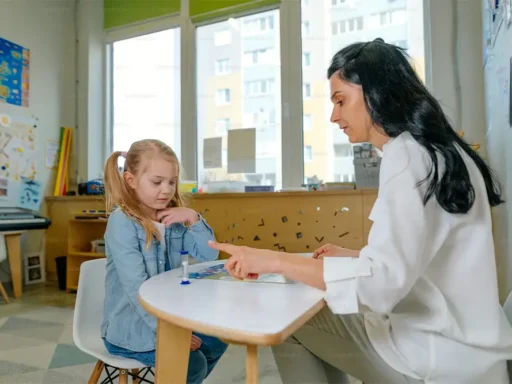
The speech-language pathologist will observe how your child communicates and plays. They’re watching to see if your child uses gestures, makes eye contact, responds to their name, and attempts to communicate even without words. They’ll ask you detailed questions about your child’s development, daily routines, and what concerns you most.
They may use standardized tests to assess both receptive language (understanding what others say) and expressive language (how your child communicates their own thoughts). These tests aren’t like school exams. Often they look like play activities while the evaluator carefully observes your child’s responses.
For example: The evaluator might set out pictures and ask your child to “point to the dog” or “show me the one that’s sleeping.” They’re assessing whether your child understands these concepts. Then they might show toys and see what your child says about them, assessing expressive language.
They’ll look at speech sound production, how clearly your child speaks, and whether there are any patterns in the sounds they struggle with. They’re noting whether your child can make certain sounds in isolation but struggles to use them in words, or whether certain sound combinations are particularly challenging.
Hearing should always be evaluated when speech delay is a concern, because undetected hearing problems can masquerade as speech or language delays. This might involve a visit to an audiologist for comprehensive hearing testing. Even if your child passed newborn hearing screening, hearing can change, and chronic ear infections can cause temporary but impactful hearing loss.
The goal isn’t to label your child but to understand their specific strengths and challenges so you can provide the most helpful support. Many speech and language difficulties respond beautifully to early intervention, especially when parents are actively involved.
What You Can Do at Home
While professional support is sometimes necessary, you play the most crucial role in your child’s language development. The everyday interactions you have with your child provide thousands of opportunities for learning and practice.
Talk About Everything
Talk to your child constantly about what you’re doing together. When you’re cooking dinner, describe what you’re putting in the pot. When you’re getting dressed, name the clothes and colors. This running commentary gives your child rich language input in meaningful contexts.
Example conversation while folding laundry: “Let’s fold daddy’s blue shirt. See the buttons? One, two, three buttons. Can you help me fold? We’re making it nice and flat. Now let’s put it in daddy’s pile. This is a soft towel—feel how soft it is!”
The key is connecting words to real experiences, not drilling flashcards or making language learning feel like homework.
Follow Their Lead
Follow your child’s lead in play and conversation. If they’re interested in trucks, talk about trucks. Use words slightly above their current level while still keeping things understandable.
For example: If your child says “car,” you might respond with “Yes, that’s a big red car going fast!” You’re confirming their communication, expanding on it, and modeling more complex language naturally. You’re not correcting them or making them repeat after you—you’re just showing them how the idea can be expressed with more words.
Read Together Daily
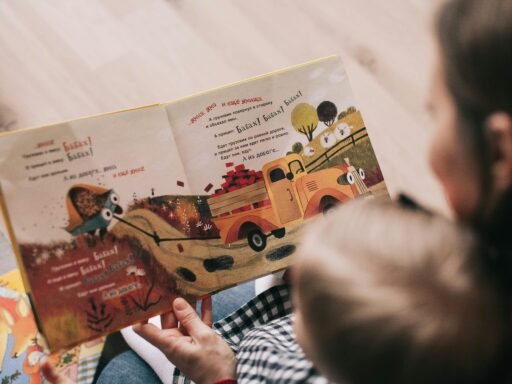
Read together every day, not because you’re trying to teach reading, but because books expose children to language in engaging ways. Point to pictures, make sound effects, ask simple questions about what you see. Let your child turn pages and interact with the book however they want.
For younger toddlers: You might just name pictures: “Dog! The dog says woof woof. Cat! Soft kitty.” For older toddlers: You can ask questions: “Where’s the mouse hiding? What’s the bear eating?”
The goal is positive association with language and stories, not perfect reading behavior.
Create a Language-Rich Environment
Reduce background noise when possible. Television running in the background makes it harder for children to process the language directed at them. When you’re talking with your child, turn off other media so they can focus on your words and your face. Face-to-face interaction is where language learning really happens.
Think of language like a radio signal. Background noise is like static—it makes the signal harder to receive clearly. When you eliminate the static, your child can tune in more easily to what you’re saying.
Give Time to Respond
Give your child time to respond. In our busy lives, it’s tempting to fill silences or answer for our children when they’re struggling to express something. But waiting patiently, showing you’re interested in what they have to say, encourages them to keep trying.
For example: Your child is reaching for something and making sounds. Instead of immediately saying “Oh, you want the juice!” try waiting a few seconds. They might surprise you by attempting the word or using a gesture. Then you can respond: “Juice! Yes, here’s your juice.”
Even if their attempt isn’t clear, acknowledge their effort and respond to what you think they meant.
Make Language Fun
Sing songs, play simple games with language like peek-a-boo or pat-a-cake, and make silly sounds together. Language learning should feel joyful, not like work. When children associate communication with fun and connection, they’re more motivated to participate.
Simple language games to try:
- Animal sounds: “The cow says moo! What does the dog say?”
- Body parts: “Where’s your nose? Where’s mommy’s nose?”
- Action songs: “If you’re happy and you know it, clap your hands”
- Silly voices: Reading the same book in different funny voices
These activities teach language without feeling like lessons.
The Path Forward
If your child is diagnosed with speech delay and begins therapy, remember that progress might be gradual. Speech and language development isn’t like flipping a switch. It’s more like tending a garden, with growth happening in fits and starts, sometimes surprising you with sudden leaps forward.
Most children with speech delays who receive appropriate support go on to develop good communication skills. Early intervention makes a significant difference in outcomes, which is why seeking evaluation when you have concerns is so important. Even if assessment reveals that your child is developing normally and you worried for nothing, you’ll have peace of mind and perhaps gain some strategies to support their continued growth.
What Therapy Looks Like
For children who do need intervention, speech therapy typically involves regular sessions with a speech-language pathologist who teaches both the child and you as the parent. You’ll learn specific techniques to practice at home, because what happens during a weekly therapy session matters far less than the hundreds of daily interactions you have with your child.
For example: The therapist might teach you “parallel talk,” where you narrate what your child is doing during play. “You’re stacking the blocks! Red block on top. Now blue block. Oh, it fell down! Let’s build it again.” This technique expands your child’s vocabulary and shows them how to talk about their actions, but you practice it during everyday play at home.
Every Journey Is Different
Some children need only brief intervention and catch up quickly. Others require more extended support. Each child’s journey is unique, and comparing your child’s progress to others, even others in therapy, isn’t particularly helpful. Focus on your own child’s growth, celebrating small victories and staying patient through plateaus.
For instance: Sarah’s son needed six months of therapy for some articulation issues and was discharged. Her friend’s daughter has been in therapy for two years addressing more complex language challenges and has made tremendous progress but still has work to do. Both children are succeeding on their own timelines, and both families are doing exactly what their children need.
A Final Thought
Worrying about your child’s development is part of loving them and wanting the best for them. If speech delay concerns you, that concern is valid and worth exploring. At the same time, try to maintain perspective. Your child is so much more than any single aspect of their development. Whether they’re early talkers, late talkers, or somewhere in between, they’re learning and growing every day.
The most important thing you can do is stay connected with your child, communicate in whatever ways work for both of you right now, and seek professional guidance when you need it. You don’t have to have all the answers. You just have to be present, patient, and willing to advocate for your child’s needs.
Speech delay is a challenge some families face, but it’s one that can be addressed with support, understanding, and time. Your child’s communication journey is their own, and your role is to walk alongside them, offering encouragement and help when they need it most.